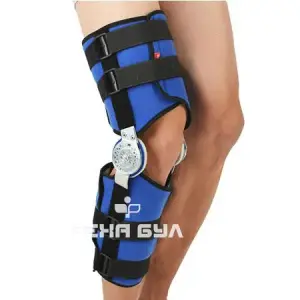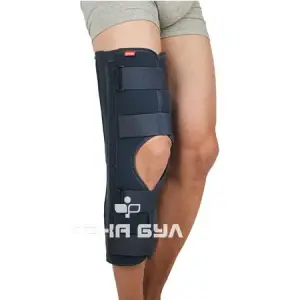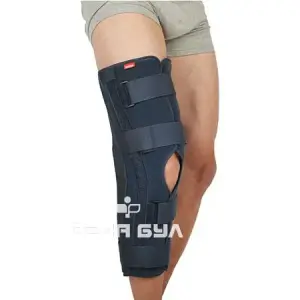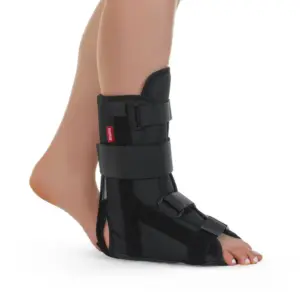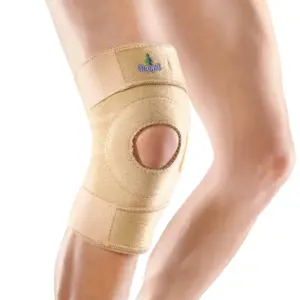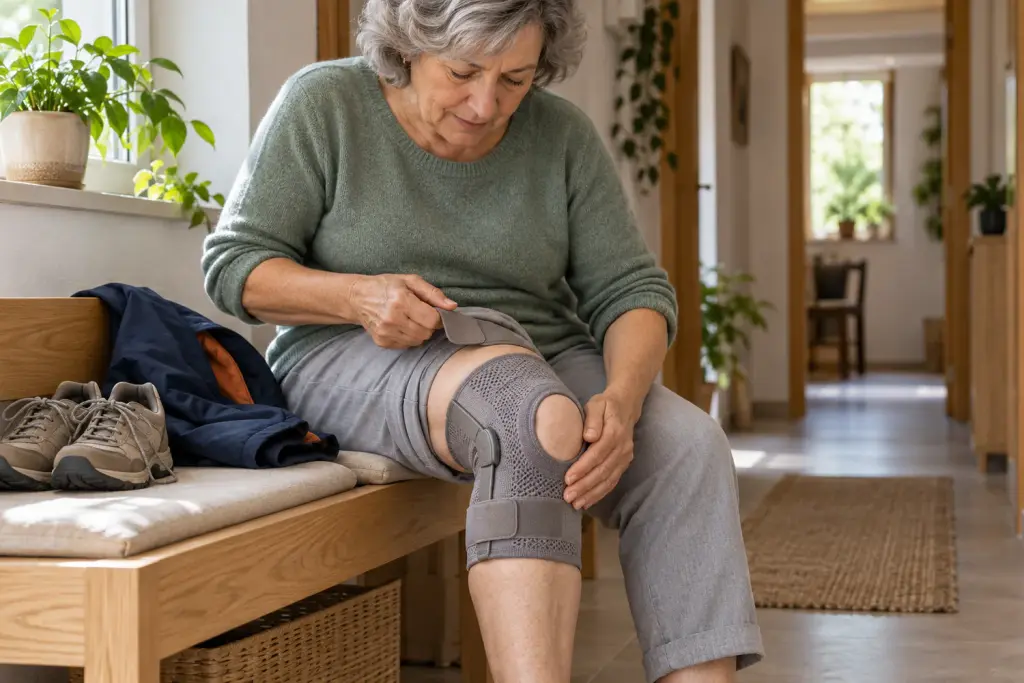
A knee brace supports the knee, stabilises it or limits its movement. The type depends on the cause: for mild pain and swelling an elastic sleeve is often enough; for pain around the kneecap a sleeve with an opening for it is used; for instability after a ligament injury, a brace with side supports; and after surgery, a brace with an adjustable hinge. Your doctor decides which type you need. The size is chosen from the measurement round your knee and the manufacturer’s size chart.
A brace does not heal on its own. It helps the knee move more securely while it recovers, or makes the day easier with long-term pain. It works best together with the exercises your doctor or physiotherapist has recommended.
What a knee brace is for
A brace has one of three jobs: to support, to stabilise or to immobilise. Some models do more than one.
- Support and warmth. A soft sleeve presses lightly on the knee. Many people feel more secure in one and walk with more confidence.
- Stabilising. Supports on both sides, or straps, stop the knee bending sideways, for example after a ligament sprain or tear.
- Limiting movement. A hinge allows bending only to a set angle, so the tissues heal without being overloaded.
For knee osteoarthritis, the UK’s NICE guidelines say braces, insoles and splints should not be offered routinely. They make sense when the joint is unstable or loaded abnormally and exercise alone is not enough. The core treatment for osteoarthritis is exercise and staying active. We say this plainly because we want a brace to help you, not to replace what actually treats the problem.
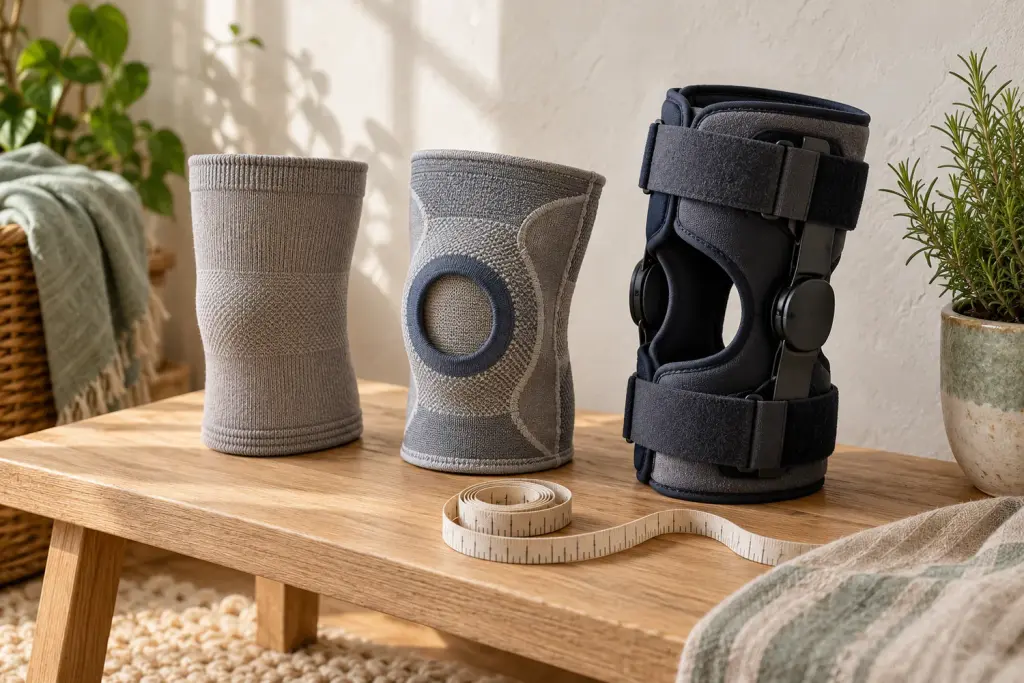
The types at a glance
The table is general guidance. Models differ between manufacturers, and the choice for your case is your doctor’s.
| Type | What it looks like | When it is usually used |
|---|---|---|
| Elastic knee sleeve | A soft knitted sleeve without supports | Mild pain, a feeling of insecurity, slight swelling, during activity |
| Sleeve with a kneecap opening | A sleeve with an opening and a soft ring round the kneecap | Pain around the kneecap, when your doctor wants it guided more steadily |
| Strap below the kneecap | A narrow strap just below the knee | Pain in the tendon below the kneecap during activity, if your doctor advises it |
| Brace with side supports | A sleeve with flexible or rigid supports on both sides and straps | Instability after a ligament injury, getting back to activity |
| Brace with an adjustable hinge | A rigid frame with a hinge set to a bending angle | After surgery or a serious injury, on prescription and set by your doctor |
| Unloader brace | A rigid brace that shifts some of the load within the knee | Osteoarthritis in one side of the knee, only on your doctor’s advice |
In the catalogue, the knee braces are described by their job: to support or to immobilise the knee.
Orthoses and compression
Knee, ankle, wrist and shoulder orthoses, supports, lumbar supports and compression stockings.
We will call you to confirm the day and the time.
Or call the nearest shop
When your doctor should decide
You can choose a soft sleeve yourself for mild, familiar pain that is not getting worse. In every other case, see a doctor first:
- after a fall, a twist or a blow with swelling, especially if the knee gives way or locks;
- after knee surgery: then the brace, the hinge angle and how long to wear it are prescribed;
- with osteoarthritis, when you are considering a rigid or unloader brace;
- for a child or teenager with knee pain;
- when the pain does not settle within a few weeks despite rest and a sleeve.
Your doctor will judge whether you need a brace at all, which type and for how long. Whether it can be provided with state support depends on the rules for your case: see our guide and ask us about the device you need.
How to measure
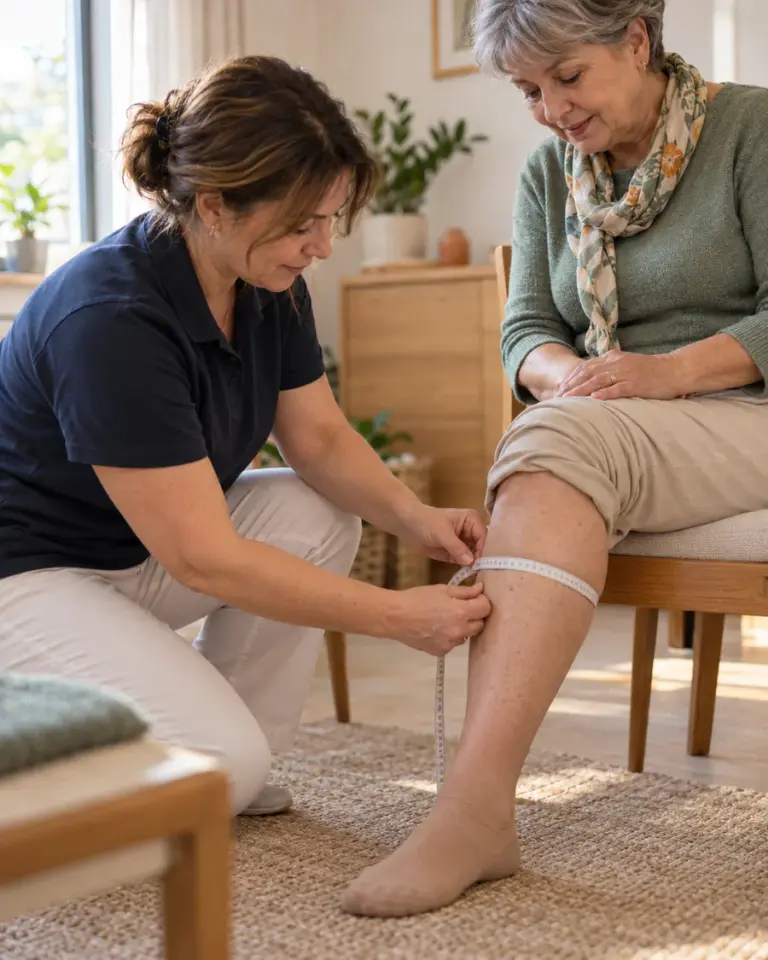
The size is set by measurements round the leg and the chart of the specific manufacturer. A size S or M in one model is not the same in another.
- Measure on bare skin with a soft tape measure, without pulling it tight.
- Round the middle of the kneecap. This is the main measurement for most sleeves.
- Above and below the knee, if the chart asks for it. These are usually taken at a set distance above and below the middle of the kneecap; the chart gives the distance.
- Position. Measure in the position the manufacturer gives: usually with the leg straight or the knee slightly bent.
- Between two sizes, do not simply pick the smaller one “for a tighter fit”. Ask a consultant.
In Reha Bul’s shops we help you choose the size. The braces come in different sizes, and some can be made to individual measurements.
How to wear the brace
A well-fitted brace stays in place, does not slip down and does not dig in.
- The kneecap should sit in the opening if the model has one. Hinges should be level with the joint, on both sides of the knee.
- Fasten the straps so that two fingers fit underneath.
- Wear the brace for as long as your doctor has said. It usually comes off at night unless prescribed otherwise.
- Check the skin under the brace every day for redness and rubbing.
- Wash it as the label says, usually by hand in lukewarm water, and dry it away from the radiator.
When to see a doctor
- Urgently if you cannot put weight on the leg, the knee is badly swollen or has changed shape, or it is red and hot and you have a temperature.
- Take the brace off straight away and get medical help if your toes go numb, pale or blue, if swelling below the brace increases, or if your calf suddenly swells and hurts.
- Book a doctor’s appointment if the knee locks or gives way, or the pain does not settle within a few weeks.
Frequently asked questions
Does a brace weaken the muscles?
If worn all the time without need and without exercise, you may come to rely on it. That is why doctors advise wearing it for a set period and strengthening the muscles around the knee.
Does a knee sleeve help with osteoarthritis?
Some people find a soft sleeve gives them a feeling of security and warmth. According to NICE, though, it is not a core treatment. The core treatment is exercise, staying active and keeping to a healthy weight.
Can I wear the brace under my trousers?
Soft sleeves usually yes. Rigid hinged braces are worn over a thin layer of fabric or on the skin, as the instructions say.
Is one brace for both knees?
Some models fit either side, others are made for the left or the right leg. Check this before you choose.
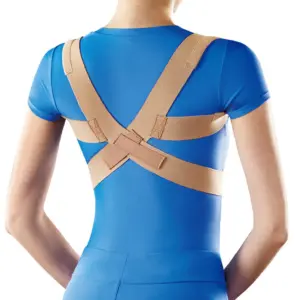
Browse the knee braces and the other orthoses, supports and back braces in the catalogue. There is more about the types of support and wearing them safely in our article Orthoses, supports and back braces. The shop addresses are on the Shops page.
Sources
Orthoses and compression
Knee, ankle, wrist and shoulder orthoses, supports, lumbar supports and compression stockings.
We will call you to confirm the day and the time.
Or call the nearest shop