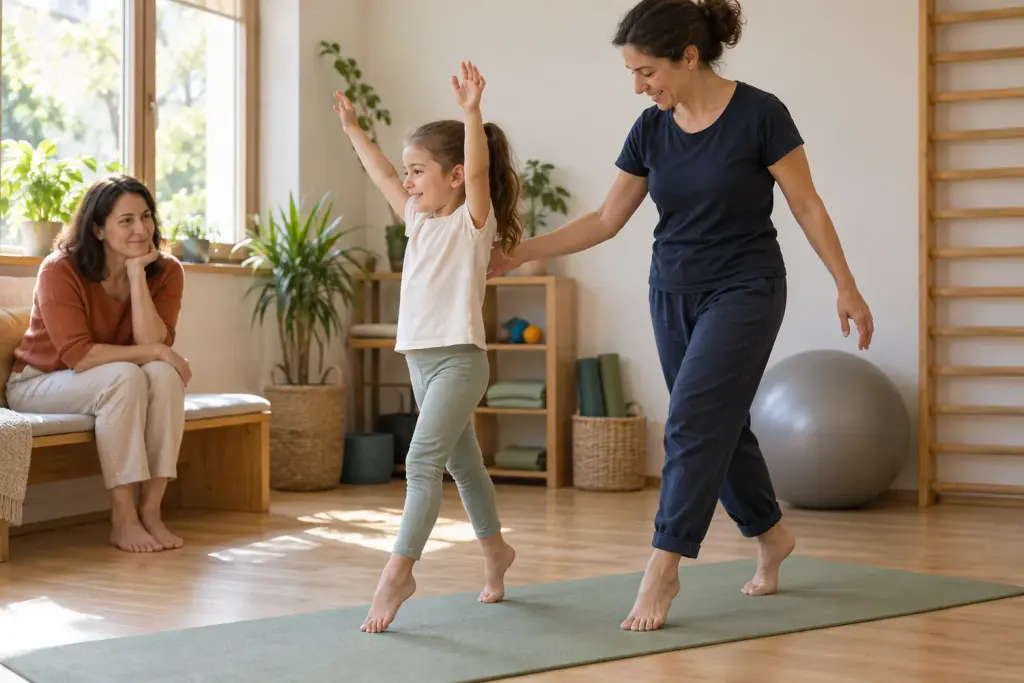
In babies and young children flat feet are normal: the arch on the inner side of the foot usually forms between the ages of 3 and 10. If your child’s feet do not hurt and they run and play without difficulty, no treatment is needed. The barefoot games below strengthen the muscles of the foot and improve balance, and a doctor is needed if the foot hurts, is stiff or only one foot is affected.
What flat feet are in children
Flat feet means that one of the arches of the foot has dropped, most often the inner longitudinal arch, the transverse arch or both. When standing, almost the whole sole touches the ground.
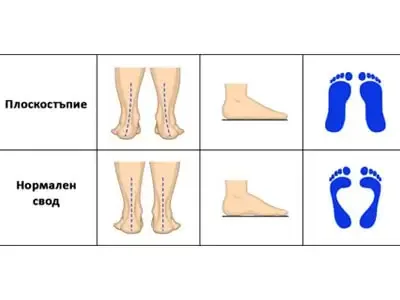
In most children flat feet are flexible: the arch disappears when they stand, but you can see it when they sit or stand on tiptoe. This is a common variation of the normal foot and usually causes no problems. A congenital, rigid flat foot is rare and should be seen by a doctor.
The feet take more strain with rapid weight gain, long periods of standing, a lot of jumping and carrying heavy loads, with weak muscles supporting the arch, with an inherited tendency and with unsuitable shoes.
When to see a doctor
Book an appointment with your GP or a children’s orthopaedic specialist if:
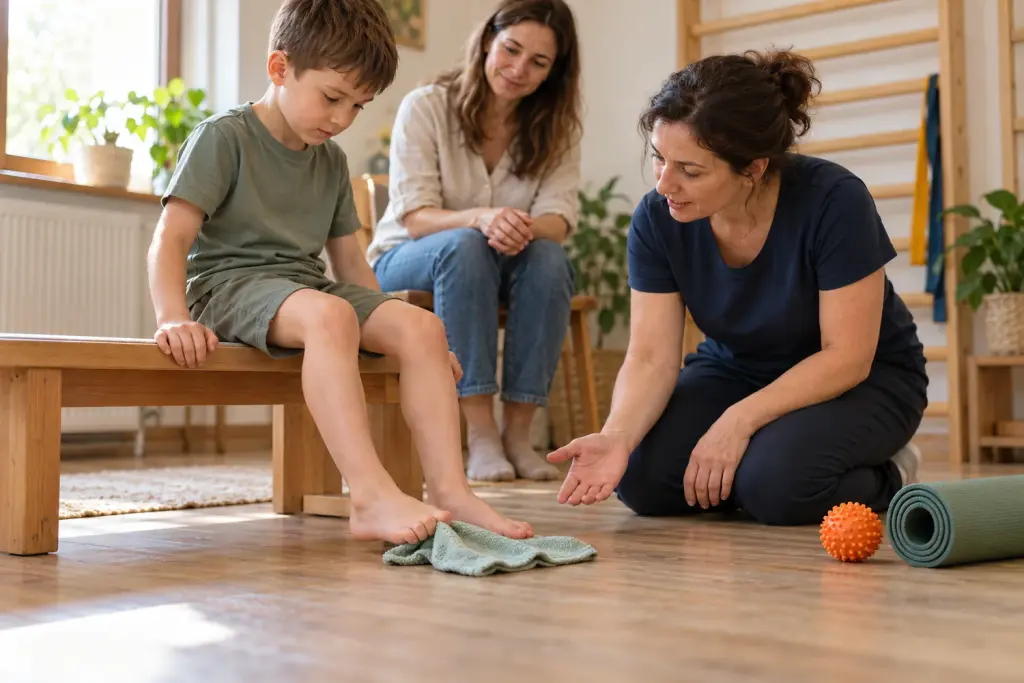
- the feet are painful, stiff, weak or numb;
- your child often trips, sprains an ankle or has problems with walking or balance;
- the arch does not appear even when your child stands on tiptoe;
- only one foot is affected or the change appeared suddenly;
- your child complains of tired legs after a short walk.
The exercises below are for children without pain whom a doctor has not referred for other treatment.
Foot massage
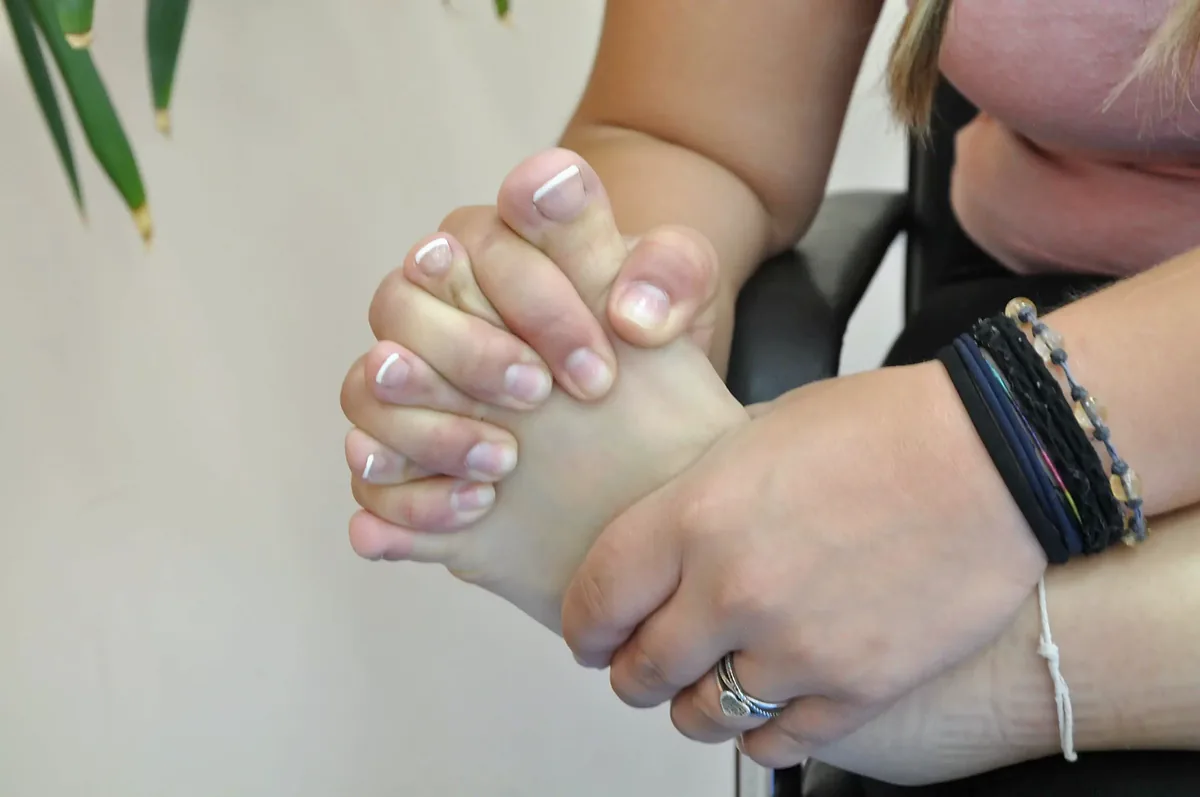
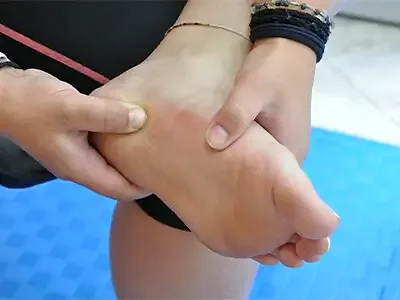
Massage relaxes the foot and is a pleasant start before the games. Your child lies or sits comfortably while you massage one foot, then the other:
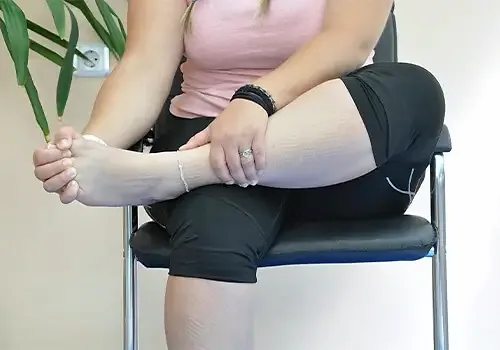
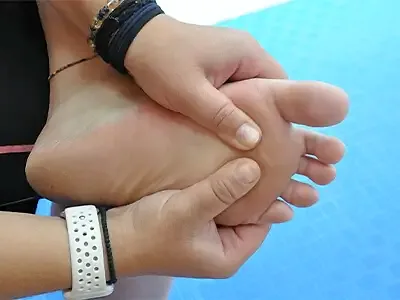
- Hold the foot with one hand, take the toes with the other (fig. 1 and 2) and bend and straighten them a few times.
- With the same grip, make circles, 10–15 in each direction.
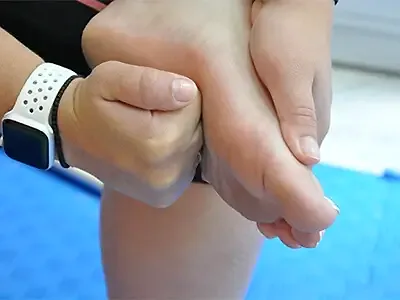
- With pinching movements of both hands (fig. 3), work along the length of the foot, on the left and on the right.
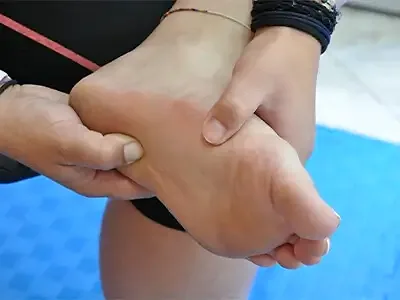
- Make a fist (fig. 4) and work along the length of the foot again with your knuckles.
- Finally, press point by point with your thumb (fig. 5 and 6), tracing a circle around the heel and over it.
Repeat each movement a few times. Keep the pressure light: the massage should not hurt.
Exercise games without equipment
Children do the exercises most willingly as games: that way they are more fun and easier, especially when they play together with the adult who watches over them. All of them are done barefoot.
The “toes and heels” race
Setting up: choose a track at least 2–2.5 m long. Put an object at the start and another object at the far end, which your child will walk round.
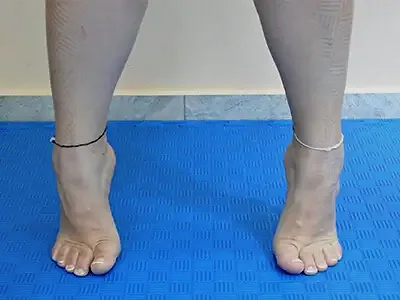
- Your child sets off from the start on tiptoe.
- On reaching the object at the end, they walk round it and come back to the start on their heels.
The same game can be played as a lap around the furniture, and for extra fun as a game of tag: you walk behind your child pretending to chase them, but the rule is that your child “runs” first on tiptoe, then on the heels.
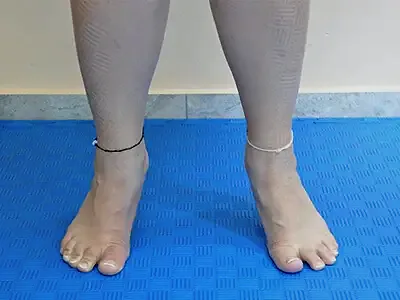
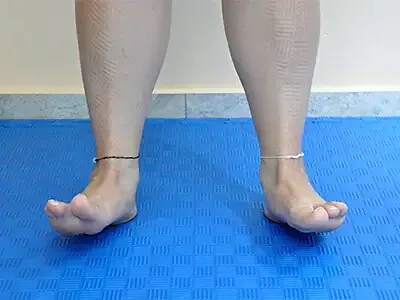
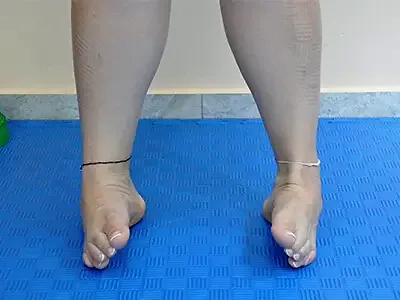
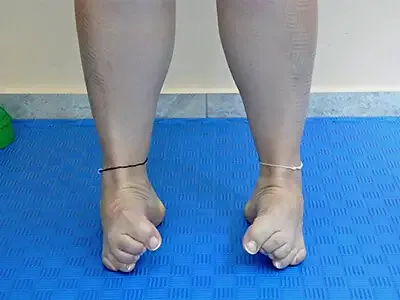
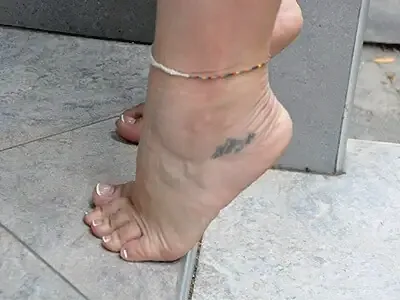
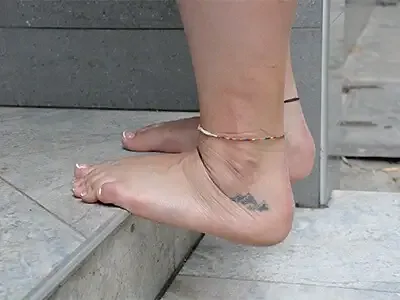
In this game it is important to watch how your child stands on tiptoe: on the balls of the feet, without wobbling (see the photos).
Along the edge
It is played the same way and with the same rules as the previous game, but your child alternates walking on the outer edges of the feet with walking on the outer edges with the toes curled into a grip.
“Pick up and count”
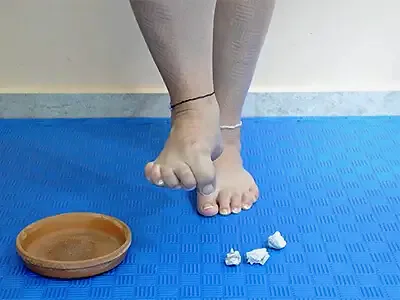
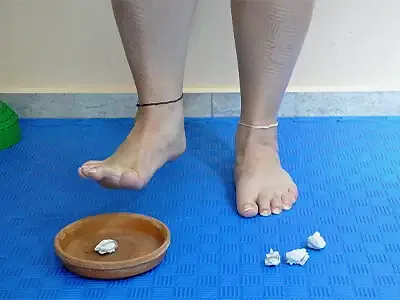
Setting up: two bowls, preferably unbreakable, and about 30 pieces of paper: tear 4 A4 sheets into 8 pieces each or use ready pieces of about 10 × 8 cm. Crumple them into paper balls and put them on the floor. You and your child stand so that you can both reach the pile. And, of course, bare feet.
- Each of you picks up the balls with the toes of one foot only and drops them into your own bowl: your child fills theirs and you fill yours. The aim is to collect as many as you can.
- When there are no balls left on the floor, each of you counts your own.
- The game is repeated with the other foot.
It is a good idea to let your child win.
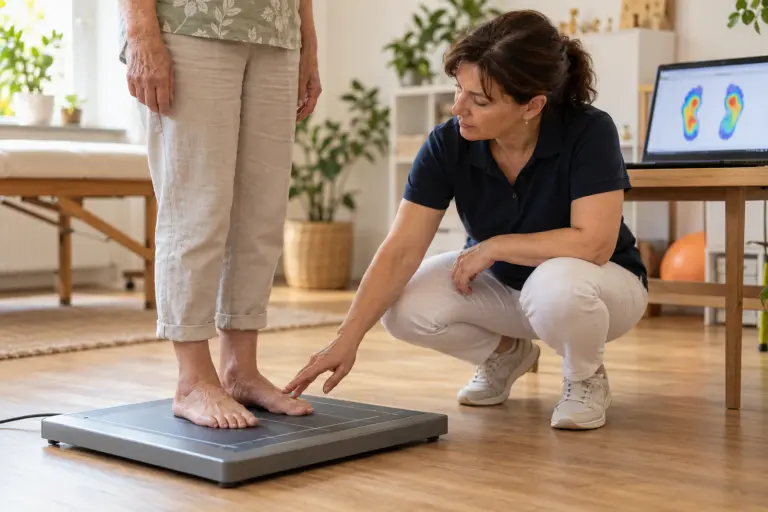
Feet and insoles
Computer foot diagnostics and advice from our kinesitherapist on insoles and shoes.
We will call you to confirm the day and the time.
Or call the nearest shop
“Giants and dwarfs”
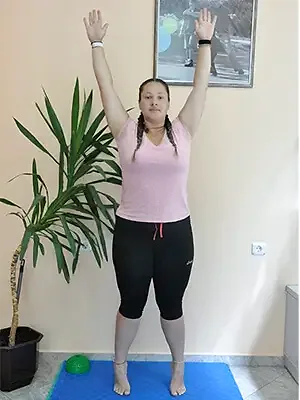
Setting up: you (the one who calls “giants” or “dwarfs”) and your child stand facing each other. Other people can join in: the more players, the more fun. Everyone stands with arms by the sides and feet shoulder-width apart.
- At “giants”, everyone rises onto tiptoe with the arms raised high and straight.
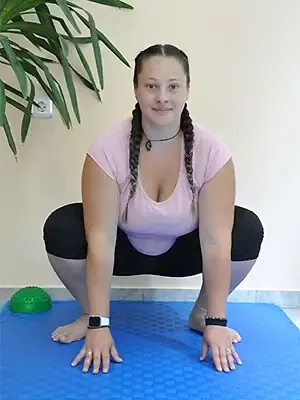
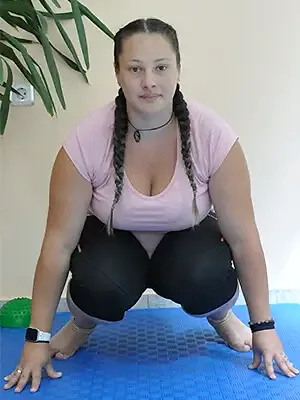
- At “dwarfs”, everyone squats with the knees out to the sides and the hands between the feet, as in the photo.
You can call “giants” or “dwarfs” several times in a row. The aim of the game is for your child to spend more time on tiptoe; the squat is the rest.
“The fan”
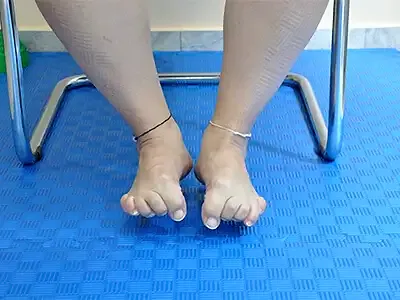
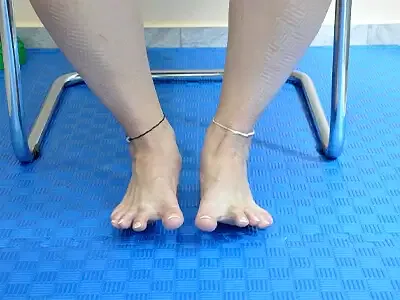
- Your child deliberately spreads the toes like an open fan.
- Then brings them together.
How many: 10–15 repetitions with both feet, between the games.
“Up and down”
Starting position: on the edge of a steady step, a threshold or a thick book, at least 5 cm high. Your child stands on the edge with only the balls of the feet, the heels in the air, holding on to a support with one hand.
- Rises up onto tiptoe.
- Lowers down so the heels go below the level of the support.
The movement is done quickly. It can be fitted in between the games, after “The fan”.
Exercises with a band and a ball for older children
For older children you can add an exercise band, a small ball (such as a tennis ball) and a balance board or another balance device. All the exercises are done barefoot.
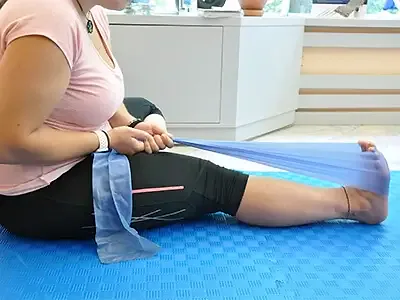
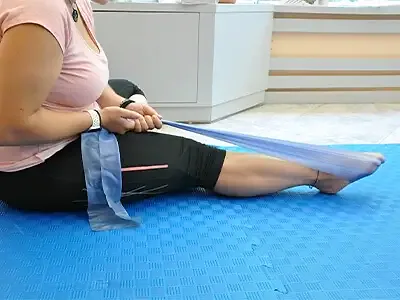
Pointing and flexing with a band
Starting position: sitting on the floor with the legs stretched forward. The middle of the band lies flat under the ball of one foot, and its ends are held with both hands, slightly taut. If sitting on the floor with the legs straight is hard, lean the back against a wall; you can also put a cushion between the lower back and the wall.
- Without moving the hands, the foot points forward.
- Then it pulls back (flex), and the two positions alternate.
How many: 3 sets of 10 repetitions with one foot, 10 with the other and 10 with both together.
Stretching the band with the toes
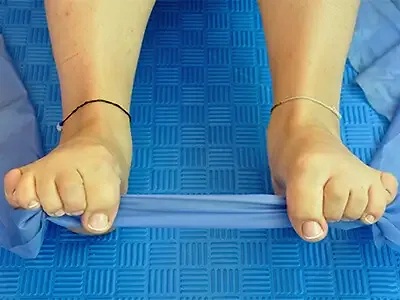
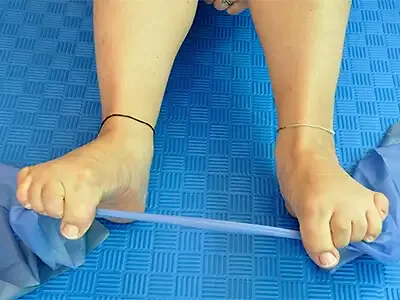
Starting position: as in the previous exercise. The band is gripped with the toes of both feet, roughly shoulder-width apart, and the hands support the body from behind.
- The feet stretch the band outwards and let it go back.
How many: 3 sets of 10–15 repetitions.
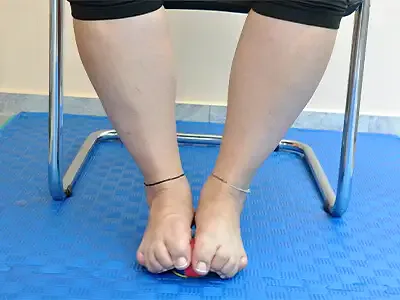
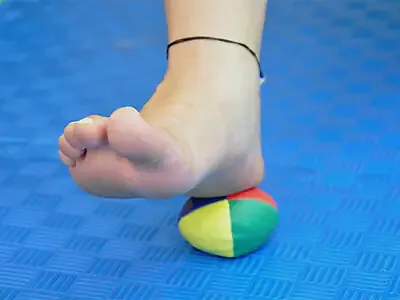
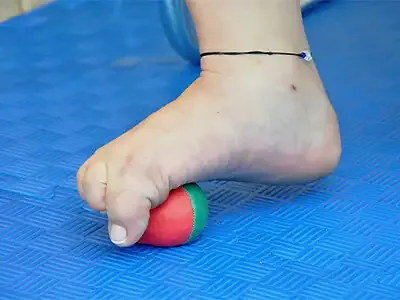
Rolling the ball under the foot
Starting position: sitting comfortably, the feet reaching the floor without dangling. The ball is under the foot.
- The ball rolls forwards and back along the whole length of the foot with moderate pressure.
- When it reaches the toes, they grip it.
- With both feet: the feet are close together, the ball moves between them, and under the toes it is gripped again.
How many: not too fast, 3 sets of 60 seconds with one foot, 60 seconds with the other and 60 seconds with both.
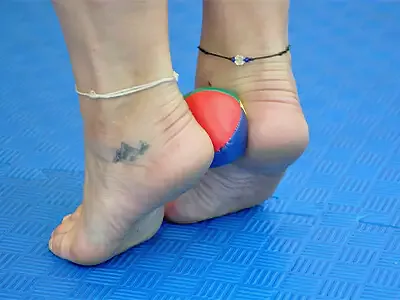
Ball between the heels and heel raises
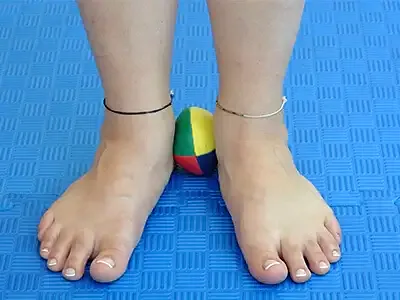
Starting position: standing, feet parallel and a fist’s width apart. The ball is between the heels and is squeezed with them.
- Rising onto tiptoe without dropping the ball, and coming back down onto the whole foot.
How many: 3 sets of 10–15 repetitions. If it is easy on the floor, the exercise can be done on the edge of a step or a threshold.
Balance exercises
If this is the first time your child uses such a device, they should stand next to a steady support: a wall, a sturdy table or something else to hold on to. At first it is easy to lose balance, so an adult is always close by.
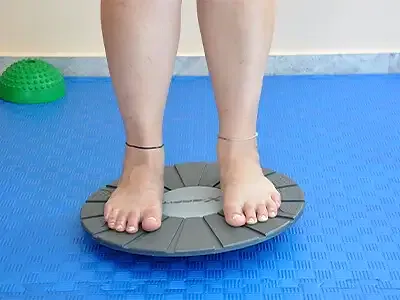
Both feet on a balance board
- First one foot, then the other steps onto the balance board, aiming to balance at the centre of the board.
- At first the position is held for a few seconds, and with each attempt the time gets longer.
- When standing and holding the balance become comfortable, your child makes small movements with the body that throw them off balance: this trains the ankle to stabilise.
Standing on one leg
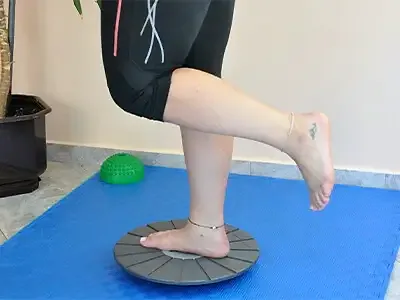
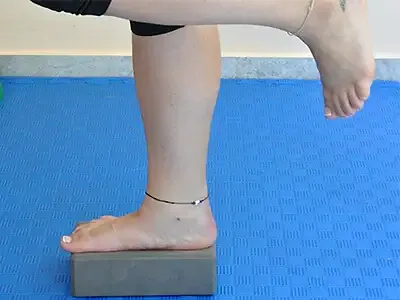
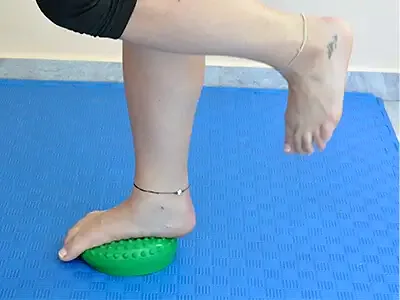
Starting position: the exercise is done on a yoga block (for beginners), a balance dome (for intermediate) or a balance board (for advanced).
- One foot steps onto the centre of the device and the body slowly straightens up to balance on one leg.
- The position is held for a few seconds at a time until standing on one leg feels steady.
How many: then 3 sets of 60 seconds.
Leg swings
Starting position: as in the previous exercise, on one leg on the device.
- Slow swings of the free leg forwards, backwards and to the side.
How many: 3 sets of 10 repetitions forwards, 10 to the side and 10 backwards, with each leg.
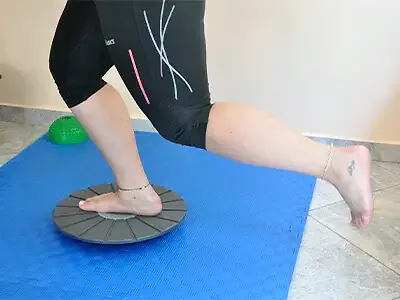
Squats on a balance board
Starting position: both feet on the balance board.
- Squatting down and standing up without losing balance.
How many: 3 sets of 10–15 repetitions.
Single-leg squat (advanced only)
Starting position: on one leg on the device of your choice.
- A half squat and standing up again.
How many: 3 sets of 10–15 repetitions with each leg.
How to exercise safely
- Short and often: a little every day helps more than one long session once a week. Stop before your child gets tired or bored.
- A non-slip floor, no scattered toys, and an adult close by for balance work and the step.
- Stop if your child complains of pain, and mention it to the doctor.
- The exercises strengthen the foot and balance and can ease tiredness, but they do not promise to change the shape of the foot.
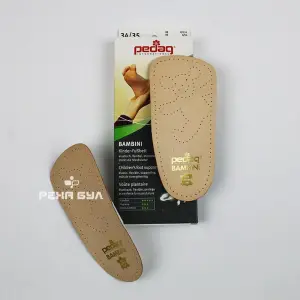
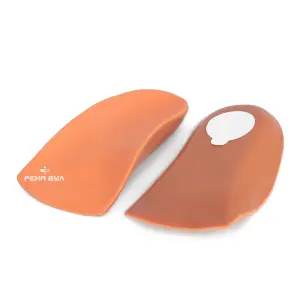
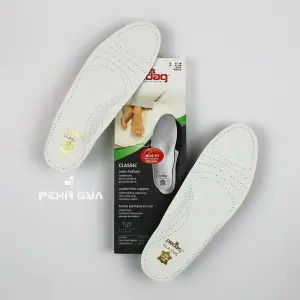
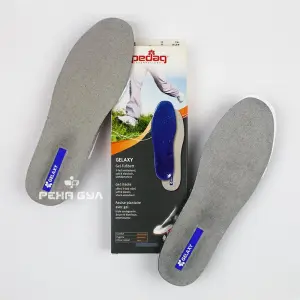
- Shoes should be wide, comfortable and low-heeled. Insoles are needed when the foot hurts or tires, not for every child with a flat arch.
Frequently asked questions
At what age does the arch form?
Usually between the ages of 3 and 10. Some children keep a flat arch as adults without it causing any trouble.
Does every child with flat feet need insoles?
No. If the feet do not hurt or tire, insoles are not needed. When there are complaints, insoles may ease pain and tiredness. The doctor or a foot specialist will tell you whether they are suitable.
How often should we do the exercises?
A little every day, as a game. Change the games so they do not get boring, and do them together with your child.
Does walking barefoot help?
Walking barefoot on a safe, soft and clean surface at home, on grass or on sand is good for the muscles of the foot. Outdoors your child is better off in comfortable shoes.
If you are not sure how your child’s feet are developing, we offer computer foot diagnostics, and a kinesitherapist will explain the results. In the catalogue, see the children’s insoles and all orthopaedic insoles, and our article “Orthopaedic insoles and shoes” explains how to choose. To book, make an appointment online or call your nearest shop.
Sources
Feet and insoles
Computer foot diagnostics and advice from our kinesitherapist on insoles and shoes.
We will call you to confirm the day and the time.
Or call the nearest shop