Earwax protects the ear and usually comes out on its own, so most of the time you do not need to do anything. Do not clean it with cotton buds, fingers or other objects: the NHS warns that this pushes the wax further in and makes things worse. If the ear is blocked, a few drops of medical olive or almond oil over a few days often help, and if nothing improves after about five days, see a doctor.
Think of the ear canal as a corridor that cleans itself: the wax slowly moves outwards and carries dust and particles with it. Trouble usually starts when we try to “help” it.
What earwax is and why it is useful
Earwax is the ear’s natural protection, not a sign of poor hygiene. MedlinePlus, the medical encyclopedia of the US National Library of Medicine, explains that it traps dust, bacteria and small particles before they can harm the ear, and protects the skin of the canal from irritation when water gets in.
In some people the glands make more wax than the ear can clear. It can then harden and block the canal. Attempts to clean it often push it even deeper.
How to tell that wax has blocked the ear
A wax blockage usually feels like a muffled ear. The NHS lists these signs:

- your hearing has got worse;
- your ear aches or feels blocked;
- you hear ringing or buzzing in the ear (tinnitus);
- you feel dizzy and sick (vertigo).
The same symptoms can have other causes, such as an infection. If you are not sure what it is, do not experiment: ask a doctor. We have written about ringing in the ears in detail in Ringing in the ears (tinnitus).
What to do and what not to do
The most important rule is simple: nothing in the ear canal. Wash the outside of the ear and leave the inside to look after itself.
| Do | Do not |
|---|---|
| Wash only the outer ear, with a cloth or a finger wrapped in a cloth. | Do not put cotton buds, fingers, hairpins, matches or any other objects into the canal. |
| If the ear is blocked, try drops of medical olive or almond oil, as long as you do not have a perforated eardrum. | Do not use ear candles or ear “vacuum” devices. The NHS says there is no evidence that they remove earwax. |
| Ask a pharmacist about drops that soften earwax. | Do not put anything in the ear if you have, or may have, a hole in the eardrum, or have recently had ear surgery. |
| If nothing improves after about five days, see a doctor. | Do not flush the ear yourself with a strong jet of water, for example with a dental water jet. MedlinePlus specifically warns against this. |
Do not clean your ears too often or too hard. The less you “clean” them on the inside, the better.
Hearing
Hearing tests with audiometry at our licensed centres in Gabrovo and Stara Zagora.
We will call you to confirm the day and the time.
Or call the nearest shop
When drops help
Drops help when wax has built up and the ear is blocked, but there is no pain, discharge or sudden hearing loss. They soften the wax so that it comes out on its own, gradually.
The NHS describes how to do this at home:
- Lie on your side with the blocked ear facing up.
- Put a few drops of medical olive or almond oil into the ear.
- Stay lying down for 5 to 10 minutes so that the oil can work in.
- Repeat a few times a day for a few days. For exactly how often and for how many days, follow the product’s instructions or ask a pharmacist.
- Lie on your side with the blocked ear facing up.
- Put a few drops of medical olive oil or almond oil in the ear.
- Stay lying down for 5 to 10 minutes so that the oil can work in.
According to the NHS, over about two weeks the wax comes out in small lumps, most often at night while you are lying down. Do not use almond oil if you are allergic to almonds. If you wear a hearing aid, take it out while the drops are working and put it back in once the ear is dry.
Earwax and your hearing aid
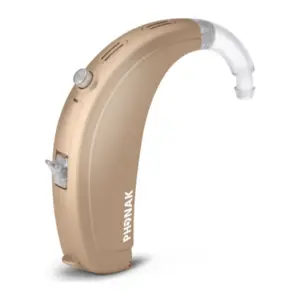
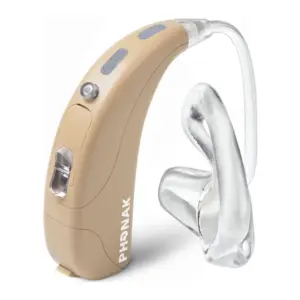
Earwax and hearing aids do not get on: wax can block the tiny receiver or the dome and make the aid sound quieter. That is why the aid is cleaned regularly according to its instructions, and the wax guard is changed when it gets blocked.
- If the aid suddenly sounds quiet, first check the dome or earmould for wax.
- Clean the aid with a soft brush or cloth, never with water or alcohol unless the instructions allow it.
- If your ears often get blocked with wax, tell the specialist. It also affects the choice of hearing aid.
You will find detailed cleaning advice in How to look after your hearing aid.
When to see a doctor
Most blockages clear with patience and drops, but sometimes you need a doctor. The NHS advises seeing a doctor or nurse if:
- your symptoms have not cleared after about five days;
- the ear is so blocked that you cannot hear anything with it, because an infection could develop.
Get urgent medical help, the same day, if you have suddenly lost hearing, if it has got worse over a few days or weeks, or if you have hearing loss together with earache or discharge from the ear. MedlinePlus adds a fever as a reason to be seen.
A doctor can remove the wax by flushing it out or by suction. The NHS says these treatments are usually painless. Start with your GP, who will refer you to an ENT specialist (an ear, nose and throat doctor) if needed.
Frequently asked questions
Should I clean my ears every day?
No. Washing the outer ear is enough. The inside of the canal cleans itself.
Why are cotton buds harmful when they look so harmless?
Because they push the wax inwards, towards the eardrum, where it builds up and hardens. The blockage gets bigger, not smaller.
Can earwax make my hearing worse?
Yes. A blocked ear hears less well. Hearing usually returns once the wax comes out. If it does not, have your hearing checked.
What about children?
The rule is the same: nothing in the ear canal. If your child complains of earache or a muffled ear, or does not hear well, see your GP or paediatrician.
Ears and hearing at Reha Bul
At our hearing centres in Gabrovo and Stara Zagora, before every hearing test the specialist examines the ear canal, for earwax for example, and decides whether the test can be done straight away. If the wax has been removed and the ear still hears poorly, it is time for a hearing test: we describe how it works in How to check your hearing. If you wear a hearing aid, our service centre carries out a full service, including ultrasonic cleaning. It is easiest to book an appointment in advance.
Sources
- Earwax build-up — NHS
- Ear wax — MedlinePlus, U.S. National Library of Medicine
- Hearing loss — NHS
Hearing
Hearing tests with audiometry at our licensed centres in Gabrovo and Stara Zagora.
We will call you to confirm the day and the time.
Or call the nearest shop